Gummy Vitamins and Children’s Teeth: Why Nutritious Foods Should Come First
Source:
Dr. Marketing
Gummy vitamins can make a daily supplement easier to give. They taste sweet, come in fun shapes, and often feel more like a treat than a vitamin.
But parents frequently ask two important questions: “Does my child need gummy vitamins?” and “Can they cause cavities?”
For most healthy children who eat a varied diet, a routine multivitamin is unnecessary. When supplements are needed, they can help fill specific nutritional gaps—but they do not replace balanced meals or cancel out the dental effects of added sugar.
At Cavity Detective Pediatric Dentistry, we encourage families to put nutrient-dense foods first while making informed choices about supplements.
Why Nutrient Dense Foods Should Be the Foundation

Nutrient-dense foods provide vitamins, minerals, and other nourishment that children need to grow. Examples include:
- Plain yogurt, milk, and cheese: Provide calcium and protein.
- Eggs, fish, poultry, and beans: Supply protein and essential nutrients.
- Whole fruits and vegetables: Provide vitamins and fiber.
- Oatmeal and other whole grains: Contribute fiber and nutrients to balanced meals.
Serve foods in textures and portions appropriate for your child’s age and eating abilities.
A varied diet supports the whole body, including teeth and gums. Calcium and phosphorus help support enamel, while vitamin C contributes to healthy gums.
Why Food Offers More Than a Gummy Vitamin

A gummy vitamin provides selected nutrients. It does not provide the complete nourishment of a meal.
An egg offers protein along with vitamins and minerals. Plain yogurt supplies protein and calcium. Fruits and vegetables provide fiber as well as nutrients. Children need more than vitamins alone: they need enough food, protein, and variety to support growth. A daily gummy cannot compensate for an ongoing lack of balanced meals.
For most healthy children, food is the preferred starting point for meeting nutritional needs. Supplements have a role when needed, but they should support an appropriate eating plan.
Can Gummy Vitamins Contribute to Cavities
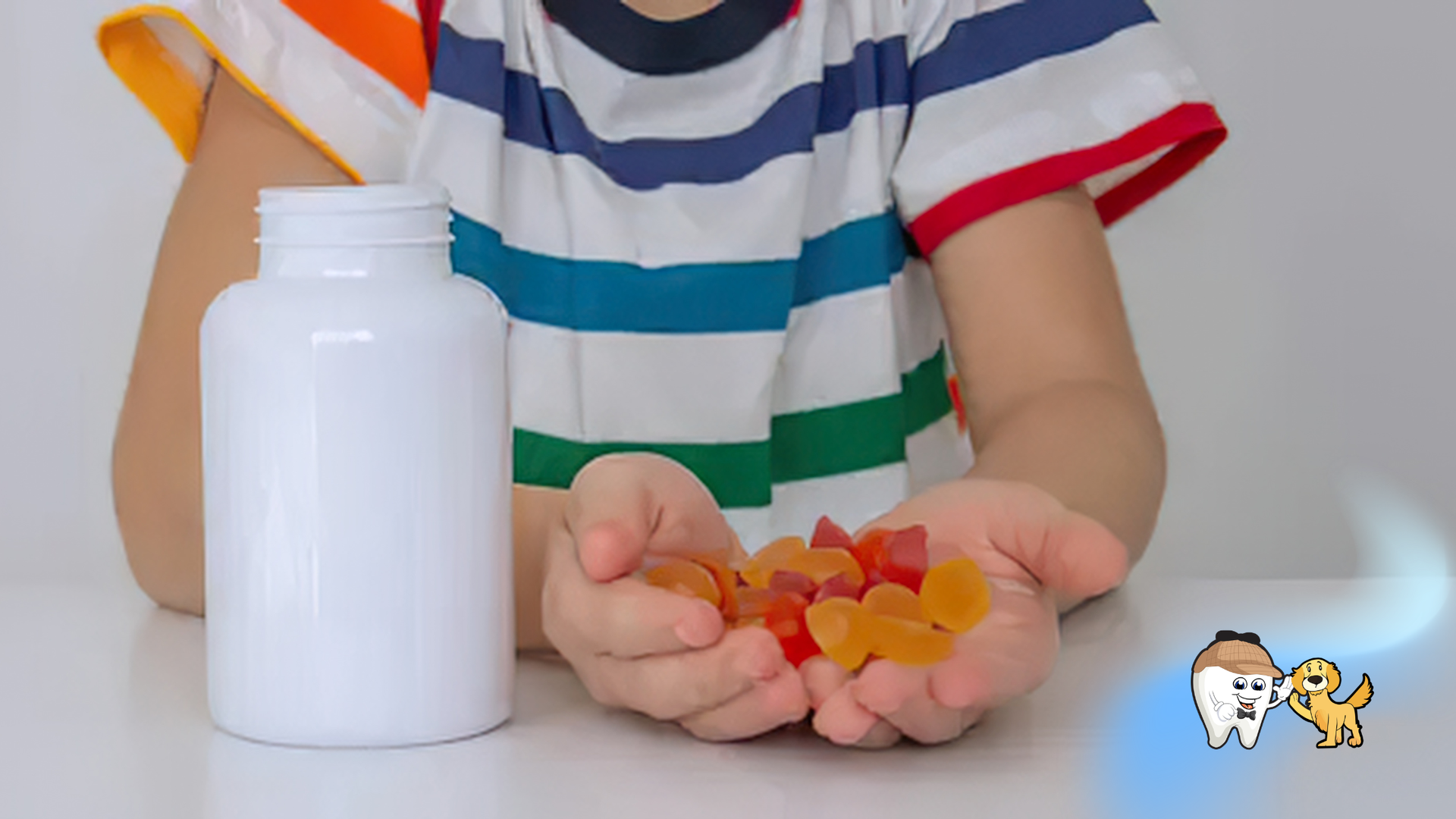
Some gummy vitamins contain added sugar. Bacteria in dental plaque use sugar to produce acids that attack tooth enamel. Repeated exposure can contribute to cavities.
The vitamins inside a gummy do not neutralize this process. A product can supply nutrients and still contain ingredients that affect teeth.
Texture matters, too. Sticky, sugary products can cling to teeth and remain in the mouth longer. Applying this principle to gummy supplements, a product that leaves sugary residue may prolong contact with sugar. Taking a gummy vitamin does not automatically cause cavities. Products vary, and your child’s overall eating habits, oral hygiene, and individual cavity risk also matter.
What Should Parents Check on the Label

Look beyond the colorful packaging. Review the Supplement Facts panel and ingredient list for:
- Added sugar: Check the amount in the full recommended serving.
- Serving size: One serving may contain several gummies.
- Sugar ingredients: Look for sugar, glucose syrup, or other syrups.
- Age and dosing instructions: Make sure the product is appropriate for your child.
- Nutrient amounts: Confirm that they match your pediatrician’s recommendation.
Sugar-free gummies remove one source of cavity concern, but that label alone does not establish whether a supplement is necessary or appropriate.
What If My Child Is a Picky Eater

It is understandable to worry about nutrition when your child eats only a few foods. A gummy may feel like reassurance, but it does not solve every nutritional gap.
Try offering a familiar food alongside a small portion of something new. Build variety gradually, and give your child opportunities to explore foods without pressure. If your child has a very limited diet, struggles with textures, or has difficulty growing, speak with their pediatrician. A registered dietitian or feeding specialist may help develop a plan suited to your child’s needs.
The goal is steady progress toward nourishing meals—not a perfect plate every time.
When Are Supplements Important
Some children need supplements because of a diagnosed deficiency, a restricted diet, or a medical condition. Improving food choices does not mean a recommended supplement should be stopped.
Ask your pediatrician which nutrient, dose, and formulation your child needs. Give only the recommended amount, supervise use, and keep supplements out of children’s reach. Vitamins should never be offered as candy or rewards.
How Can Families Protect Teeth When Gummies Are Needed

Give them with a meal when the directions allow. Saliva production increases during meals, helping clear food and reduce the effects of acids. Avoid turning gummies into another sugary snack between meals.
- Offer water afterward. Water helps clear residue, but it does not replace brushing or flossing.
- Keep gummies before nighttime brushing. Avoid giving a sugary gummy after your child’s teeth have been cleaned for bed.
- Maintain daily dental care. Brush twice daily with fluoride toothpaste, clean between teeth daily, and keep regular dental appointments.
You can also ask your pediatrician or pharmacist about another age-appropriate formulation. A liquid or chewable tablet is not automatically sugar-free or better for teeth, so compare the actual products.
Focus on Nourishment and Healthy Habits

Nutrient-dense foods offer more complete nourishment than a gummy multivitamin for most healthy children. When a supplement is needed, thoughtful product selection and a consistent dental routine can help protect your child’s smile.
At Cavity Detective Pediatric Dentistry, we can review your child’s dental habits and help you understand how supplements fit into their individual cavity risk.
Have questions about gummy vitamins? Bring the bottle or a photo of the label to your child’s next visit.
Share This Post
Thank You For Choosing Us